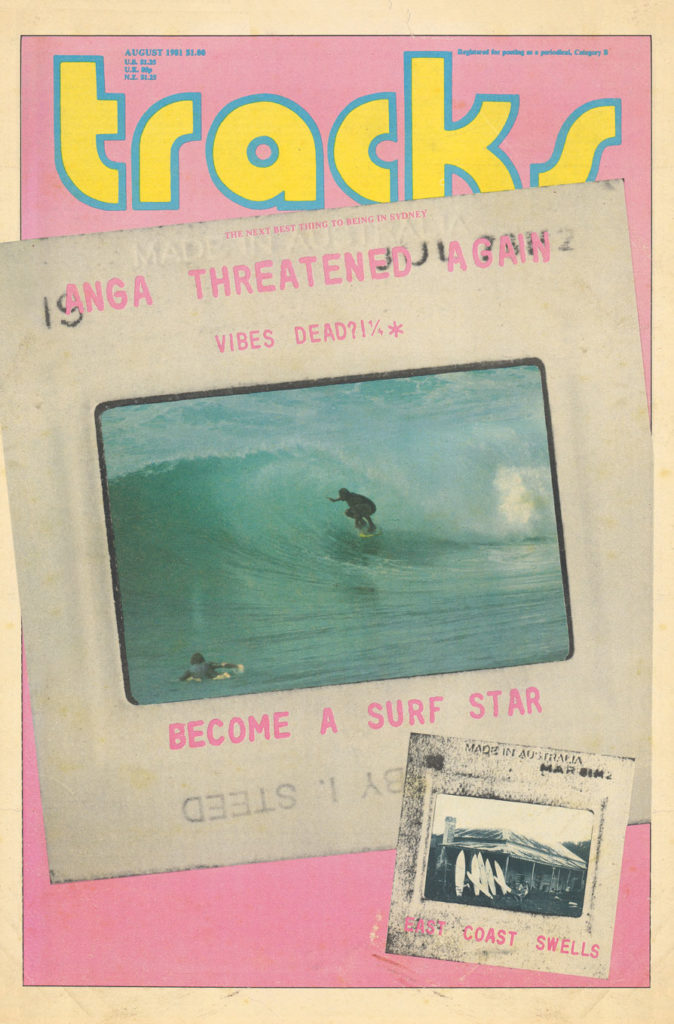
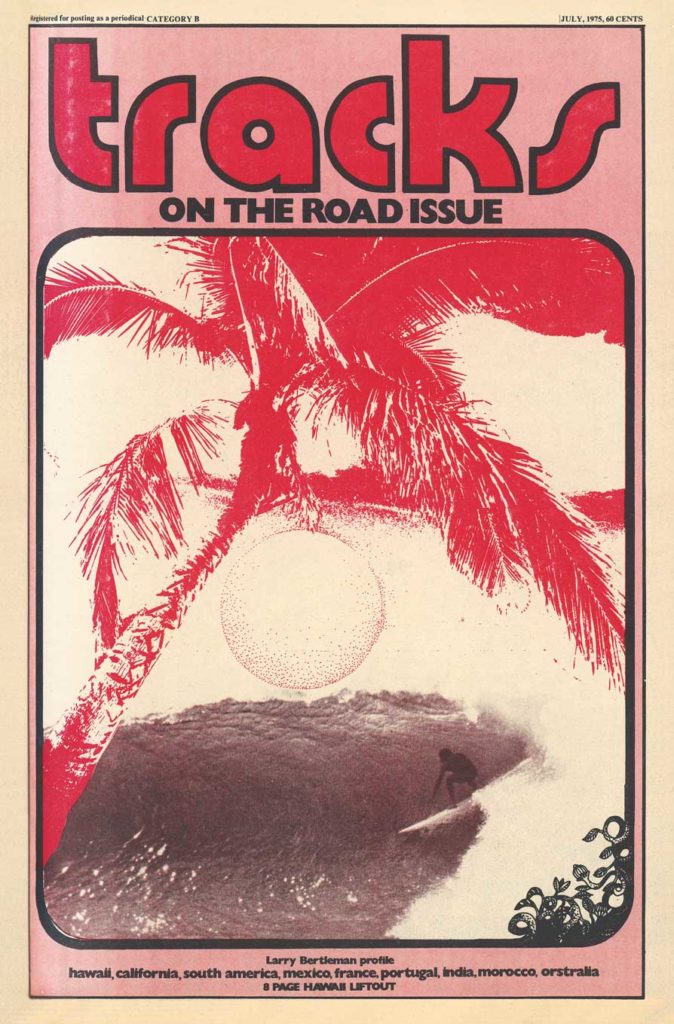
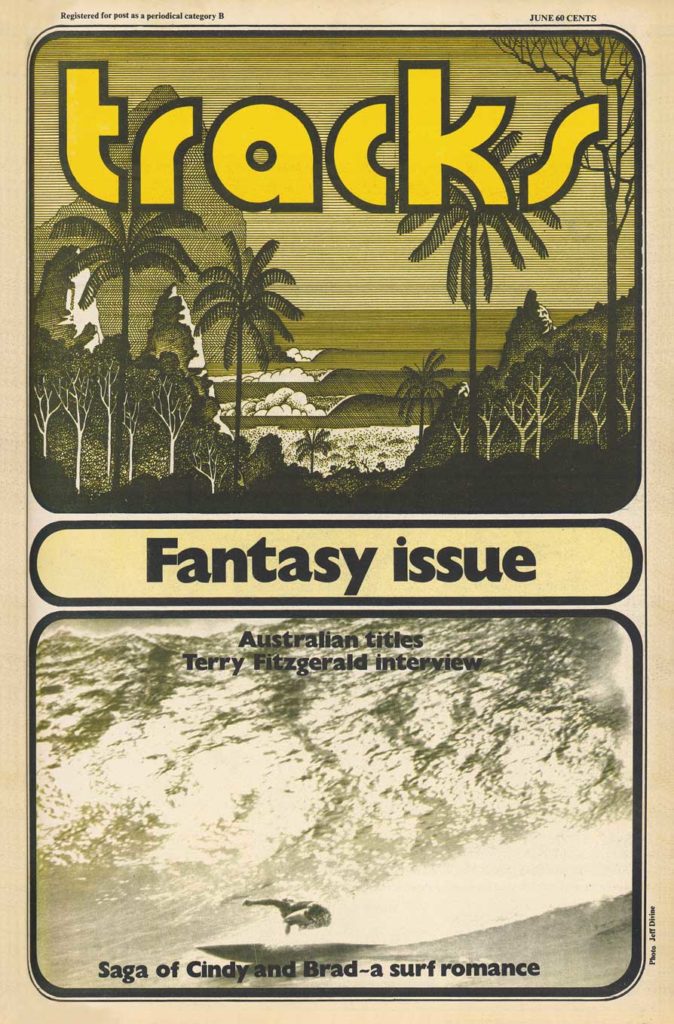
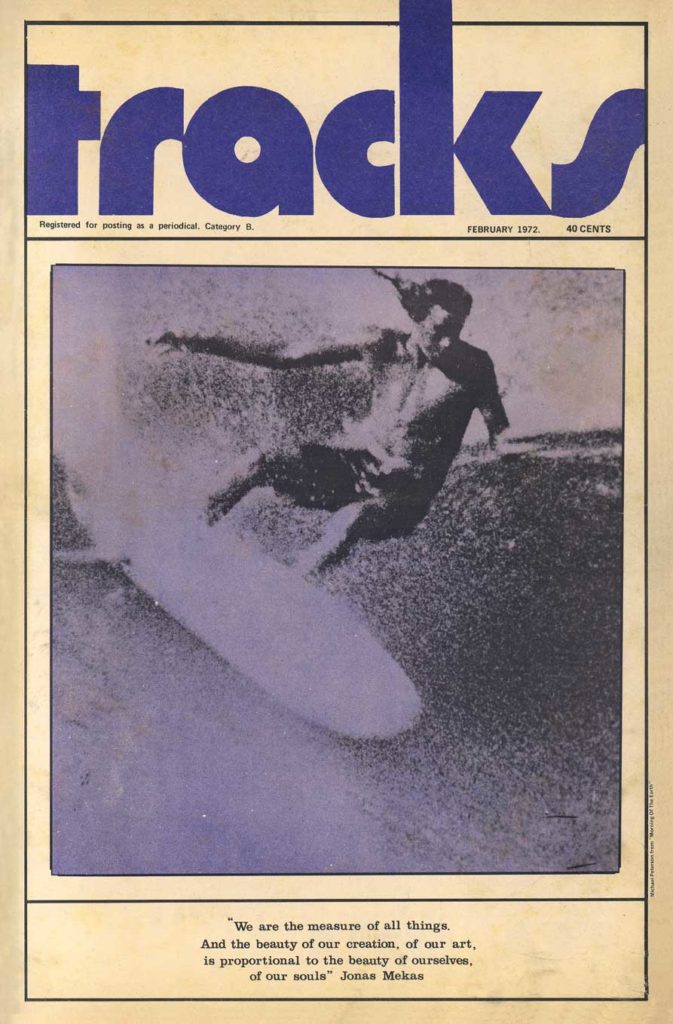
It’s 1979 when intrepid duo William Finnegan and Bryan Di Salvatore hustle a boat ride to Plenkung Point in east Java, better known today as G-Land. They’re certainly not the first visitors to the fabled left reef, but they do arrive to find Mike Boyum’s mysterious jungle camp spookily empty. As usual the duo wax-up and wax lyrical on a range of topics, and the story provides a telling insight into what an Indo adventure felt like some forty years ago.
Three of us were thinking about a trip to an Asian mysto spot. When we mentioned the expedition to Jose, a goofyfoot from Ecuador, in a Denpasar cafe, he paused over his sate a minute, then named the exact back issue of which publication the place had first appeared in. He had always wanted to surf that wave, he said, though he had never known its name.
Surf magazines make myths, that’s obvious. Hot Rat #609 becomes a legend overnight, his snap backs his nose turns drooled over and discussed in salty seminars on six continents. A mossy stab of shale beside some obscure harbour in an otherwise forgettable archipelago creates a suckular section that attracts the right photographer and riders, and wham next month the spot joins the international lexicon of waves to be reckoned with, points of ledgy reference, the stuff of urban dreams. Okay. Jose was just plugged into the collective article memory.
Leaving Bali (as paradises go, the original Kodachrome fantasy and no longer fooling anyone) for other Asian isles, the intrepid barrel hunter enters however, the high-stakes game itself, tracking rumors and semi-documented milagros through nerve-tests that somehow never figured in those armchair reveries over coyly worded, lushly photographed articles in the mags – those beautiful teases that may have got your ass in gear to begin with, but gave no clue as to the sort of beast you’d find beyond the veil.

But surf magazines also make ghosts. It seems. Not only teenage world champions who crown their glory by quitting surfing completely and passing the next years with eyes closed above a jazz piano, but dream waves that never break again, red-hot tube treasure maps that for one reason or another become lost knowledge. It was some form of this Atlantean process that we suspected anyway, when we left, with Jose, the too well charted waters of Kuta in search of a lone and isolated lefthander that had had its brilliant, and rather mysterious moment in the magazine sun a few years back.., and had not been heard from again. Would the place turn out to be an exception, the first in our experience, to that inexorable surf spot metamorphosis, from pristine refuge to crowds? We had our hopes. Call it Plenkung.

Surf Family Robinson
The difficulties of access were always infamous. Geographical remoteness was compounded apparently by some kind of governmental restrictions, which would no doubt require a good shot of cash and jive to circumvent. Earlier publicity about the place had in fact centered on the scheme of a certain American entrepreneur to grease all those logistic and bureaucratic wheels for visiting surfers, providing transport and bush lodging and minimal hassles for a very healthy fee, a sort of package tube tour that its organizer advertised as a ‘surf camp’, with the refundability of payment in the case of flat spells an unraised issue. It was since the demise of that bizarre concession that the long silence had fallen on the subject of this world-class wave we sought.
For our rag-tag party of four, local officialdom turned out to be the least of the many obstructions. The weather, the roads, team health, the Asian penchant for marathon sessions of haggling over price, debates to be renewed each morning despite any and all agreements of the day before, proved more exasperating and expensive. In the end, though, we finally did board a solid-looking sampan with all our barang-barang one drizzly morning and, after a harrowing hour of near-swampings in the closed-out pass from a rivermouth anchorage to the open sea, were at last on our way to the surf that all the fuss was about.
Landing that same afternoon was, fortunately, an easier matter, only made tricky by the passengers’ complete inability to take their eyes off the big blue walls peeling off the reef a mile or more south. It was a different world out here from the grubby mud villages where we had hired the boat. White sand, clear water, offshore winds – and luxuriant virgin jungle brimming right down to the high tide line. Virgin jungle? As the bow furrowed into the sand, we were staring up into the solidest wall of greenery since Johnny Weismuller hung up his sarong. It could have swallowed a battalion of Livingstones without so much as a belch. At the moment, an even more welcome sight than the wave was a cluster of half- collapsed bamboo structures up the coast, fronting right onto the break – the remains, we recognised of that old ‘surf camp’ and definitely our only hope for a little shelter from the full-tilt tropical wilderness we were about to be abandoned in.

The accommodation, as it turned out, was first class. Several huge tree houses had bitten the dust, and there were great piles of thatch and bamboo where other ambitious buildings were rapidly being recycled by the jungle. But one rickety, three-storey affair still stood on the former campsite and in a matter of minutes mosquito nets and clothes lines had transformed the second floor into something like home. In that King Kong landscape- complete with egrets and giant osprey watching us from the branches of faintly surreal trees, dark beetling cliffs drowning in vines some distance inland, and great brooding purple mountains -further up the steep, wild coast – it was no small comfort to have a ready made camp from some sunnier movie. Surf Family Reef-in- Sight.
But as our erstwhile ferrymen set sail again with undisguised relief, it was easy to share their astonishment at our situation. After all, who in their right mind would choose to be marooned, for no apparent purpose, so far from hearth and home? In some ways, outback villagers seemed to think surfers were less silly than other tourists (and one would have to penetrate the heart of Borneo or worse to find people these days with no experience of any tourists) – at least they were the surfers, were not forever seeking some kind of perfect environment in which to do nothing, or stranger still, to go native. Instead, these sun-addled devotees of the ombak sought a specific situation in which to practice their mystic discipline. The madness, went the local reasoning only came in with the excessive peril, solitude, and spectacular unprofitability of this most decadent (Muslim, Marxist), or was it most religious (Buddhist), Sport. In any cases, with the help of these forgivably dubious locals, we had reached our goal. And with a little more help from those hopefully reliable fellows, we would make it back out to tell the tale.

Meanwhile, beyond the wide and shining shallows, backlit by a setting sun, stacks of mechanical lefts were pouring silently across the view. There was no time for a go-out though. Only all night to listen to the monkeys and the rain. Somebody saw a wild boar on the beach at dusk. So it’s pull up the ladder before breaking out the earned beef and tequila. Then toast the morrow boss. And whoever built this fife trap?
The breath of the beast
At dawn the wind was wrong and the tide was splashing around on the ground floor. The waves looked lumpy and big and too fast to make. But after breakfast the wind swung around, the sun came out and the long even lines began to clean up. Time to unsheathe sticks, wax up, drop ladder, and hit it. We might be only two days’ sail from Uluwatu but those empty walls are definitely looking lone/y –out there.
But it was a polite session that first one. The waves weren’t shy. We were. Eight foot sneaker sets were putting us on our best behaviour, and we had occasion to recall some old celebrity’s alleged description of the wave as ‘3 or 4 Pipelines strung together’. Any doubts as to the power of the place were dispelled when Bryan got smoked and came up bleeding from the ear, unable to distinguish board from water from air. So for a moment there it was hot in his gasping face – the breath of the beast, blowing through our veil of sport.
In the days to come, tracks would be carved with increasing confidence across the big smooth faces. Insolent off-the-lips would get to be common-place – but that first morning we trod lightly. You Jane, Me Tarzan’ was not the first dance on the card appearances not withstanding. A serious injury in such a place would he serious indeed.
Five hours in the water and the most radical tide drop any of us had ever seen left us with two hundred yards of exposed reef to cross to get back to camp and several million lovely urchins to tiptoe among as we went. Again, small cuts and nasty spines are a nuisance anywhere, but in the bush in Asia they become problems of another order, necessitating major peroxide offences just to minimise the inevitable ulcers, contributing their infections to other complaints, determining whole psychologies and generally commanding much more attention than they should from four adults, Dr. Geoff not withstanding. Wondering what sort of infirmary the late camp director had maintained for his unluckier guests. We limped back to Chez Plengkung to nurse our wounds and consider our own excellent luck.
The swell was pumping, conditions were superb, we were apparently the only surfers to have reached the place in ages, and the chances of our being joined by others, any splinter of the great crowd bloc that bristles all over Bali, were less than remote.
Still, it wasn’t like other isolated waves we had found. On the paradise trail, the much-valued feeling is that of being Adam in the Garden, the first people to ride this or that spot. Each expedition after the original discovery has then an inevitable air of descent, the prototypical experience scaled down and somehow each time diluted – which, while it mar not dull the pleasure of empty waves, does at least serve to spike the well-founded anxiety that the droves who Do Not Know may soon find out.
Here at Plengkung though, it was different. One had no fond illusions that she was virgin. And one felt unusually free of that dread which whispers the same aphorism in the ear of every arrogant tourist, and decadent hunter of unicorn purity: that we always help to destroy what we seek. No: here something had been destroyed already. Old Plengkung really was an exception to the entropic process of exploitation we had come to know too well. So for once we did not need to feel haunted by our complicity in a Shangri-La’s desecration. The ghosts of far grislier ambitions than ours festooned the spot like improbable neon.
Surreal prices and unreal rumours
In the course of getting a permit from the Forestry ‘Department to camp out at Plengkung, we had been handed a file, the record of the ill-fated camp whose facility we would eventually Occupy. It was written in Indonesian, none of our strong suits, but evidently contained in its charter a description and capsule history of surfing. We noted references to ‘Raja Kemahameha’ and to leading lights of the modern era. But what did these Javanese bureaucrats make of this file, this foreign mania that brought Young Australians and Americans thousands of miles and then out to so uncomfortable a place as Plenekung, with their strange and fragile ‘skis’, and engendered such a mad scheme as this Mr Boyum’s? Well, money, for one thing. Besides a few names we knew, we saw among the camp’s records some of the colossal fees that had been paid to, and presumably split between Mr. B. and his sponsors in the Forestry Department. One large party had coughed up nearly ten thousand dollars for a months’ sojourn! Money is something understood very well indeed in Asia, and we had seen evidence of some fairly radical local inflation ourselves when we went to hire the sampan and at first heard surreal prices – apparently those paid by the last desperate surfers to get that close to Plengkung. But, as we say, it had been awhile. What exactly happened to Mr Boyum and the camp we don’t know.
You hear different stories, though all versions agree that the project will not be revived, at least not by the same principals. In Bali before we left, a rumour had been circulating to the effect that the camp’s first spokesman and star surfer, a well-know n Floridian, had recently been shot in Bangkok victim of one too many involvements with unconfirmed Asian economies’. Rumour unconfirmed.
What is certain is that the paradise trail has left its curious marks on the area, and that they are fading. In the fishing village where we ultimately got a boat, for a fairly reasonable price, we saw in someone’s hut a dinged old Hawaiian gun with the pintail broken off. It looked so out of place we were reminded of the .’cargo cults’ that still exist in primitive parts of Polynesia. Very briefly, some early trader turned the locals on to small miracles of which they had never dreamed, and his return with ever more wonderful goods slowly became a religion. In the New Hebrides, they wait for John Frum. In this malarial East Javan village, we wondered, will they one day wait for Gerry Lopez? (At Uluwatu they still do!)
Whoever actually built the huts at Plengkung, they did a beautiful job. The sheer amount of work, in that climate and in that jungle and so far from town, was enough to make us tired, just the thought. It was all we could do, after a hard day’s surf, to make a fire, cook rice, twist a top from a bottle, and drink to the continued health of good old Yankee ingenuity.
It may have been a venture of debatable karma, and it may have come to a dismal end, but imagining Plengkung bustling with commerce and San Diego drawls, the waves alive with twin fins and North Narrabeen snarls – picturing it all not as some future shock nightmare, but as history as something that already happened – was such a pleasant turnaround for the ingrained Cassandric fantasy habit…that Allah should bless you anyway. Mr. B.
One Last Look
There would have been no talk of refunds that week. The swell was consistently overhead, the lines long and clean, the feathering spiral tubes nothing if not hypnotic. If Plenkung wasn’t producing barrels you could compare with Padang, it was certainly churning out high-quality walls, and with its exposed location, the potential for giant perfection seemed unlimited. Supplies ran low and a week in the sticks, without cold drinks or fresh fruit or any other faces but the same three sunburnt mugs can get long. Still, the consensus was that two more weeks of the same, of the surf and the distinctly un-Indonesian silence, would have suited us all just fine.
But the sampan came back, to general amazement on schedule. Some fishermen who had showed up the night before – on foot, their only explanation of their route ‘Timor’ east) – helped us carry our stuff down to the break in the reef where the boat would land. In return we gave them leftover rice, a jerry can, a flashlight, scraps of plastic and cardboard. They were most fascinated though, by our boards. They called them ‘skinny boats’. We left. With our space-age polyurethane sampans stacked on the knotty, unfinished deck of the ancient double-ender – probably very much like the craft, we figured, that plied the Sea of Galilee in biblical times – we took our last look at Plengkung’s long fine lefts, peeling down the point just as on the day we arrived. Our boatmen were happily frying squid on the block of a greasy, side-mounted diesel that had recently supplanted the ship’s traditional sail. Back on the receding beach, one bay had already turned a piece of plastic into a sun hat. We had done our part for cargo cultism too, it seemed.
And we had escaped. Plengkung had never quite lost its spookiness, and so relief helped take the edge off my regret at leaving. The Big Monkey himself could come stomping, out of the jungle now. We were out of reach. Of course, we were headed hack to Indonesia, where the trials and tribulations of travel were anything but imaginary. Camping may have its deprivations but they are comparatively simple ones. So it had been a vacation from a vacation, a holiday from the onslaught of Asia. And if Plengkung had somehow been an evolutionary backwater, a lucky fluke on the paradise trail, it had also been a graphic object lesson in the necessary fate of attempts to capitalise on the wilder gifts of geography, to normalise and harness the inherently rowdy dreams that drive us Zen Conquistadores: to these ludicrous extremes to begin with. Plengkung, for our purposes, could have been anywhere. Surfing one wilderness is much like surfing another. The Garden is, after all, only a metaphor. But it was Mr Boyum’s misfortune that this place should base been located in the hemisphere it is.
Jose was headed back to Kuta and we did not envy him. Further up the trail, we had our eyes on a place that promised it all. Not a new discovery, hut it well kept secret, it was said to have spawned just the right level of Westernisation in the nearby village – a hospitable losmen with absolutely no hassles. Hardly creatures or comfort while on the road, neither were we masochists for non-stop hardship and fish heads. And though culture-vulture tourism is as gross as ever, living with local folks does beat the hell out of both bushwhacking and the Holiday Inn for real soul-satisfying travel. So this new place sounded ideal. And, of course, there was The Wave: a big clean right. Always The Wave.
But this latest hot tip was a special. Marked Rush. Seemed there was an article in the works, some immoral photographer about to blow the cover off the spot. We would have to hit it now, write our names in the Pre- Publicity phase of the wave’s mythology while we could. Okay we play an endgame, pressing a Grail quest with a killing paradox at its heart. But this joint where we’re going is said to hold waves over triple overhead. breaking into the deepest bluest bay you’ve ever seen, with white sand and trade winds and
Nobody’s ever surfed it at max…
Check Out: GRAJAGAN – Surf Journals from the Tiger’s Lair: 1972-84
The authentic origin story of the greatest left-hand wave in the world as told by Thai Stick co-author Mike Ritter and noted surf filmmaker Jack McCoy.
The book will be available in a regular edition and Limited Edition.
Due for release in October 2022. Announcement re pre-sales in September.
LINK: https://www.cyclopsproductions.com.au/shop/p/grajagan-surf-journals-from-the-tigers-lair-1972-1984